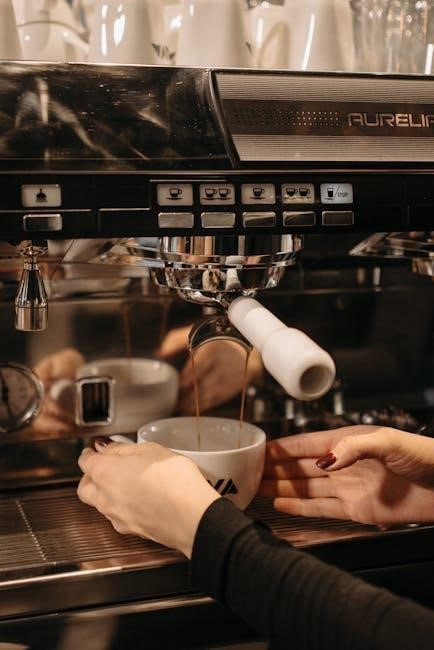
Cuisinart Espresso Machine Manual: A Comprehensive Guide
Discover detailed guides for EM-300, EM-100, and EM-400 series, alongside downloadable manuals from sources like Internet Archive and ManualsLib, ensuring optimal brewing.
Cuisinart offers a diverse range of espresso machines, catering to both novice and experienced coffee enthusiasts. From the user-friendly EM-100 to the advanced EM-400 series co-developed with Illy, these machines aim to deliver café-quality espresso in the comfort of your home. Accessing the correct manual is crucial for understanding your specific model’s features and ensuring optimal performance.
Resources like the Internet Archive provide free downloads of Cuisinart espresso maker manuals, including the EM-300 and EM-100 series. ManualsLib hosts the instruction/recipe booklet for the EM-400 series, detailing its unique capabilities. These manuals cover everything from initial setup and brewing techniques to maintenance and troubleshooting, empowering you to fully utilize your Cuisinart espresso machine and enjoy consistently delicious results. Understanding your machine’s specifications, as outlined in these documents, is key to a satisfying espresso experience.
Understanding Different Cuisinart Espresso Machine Models
Cuisinart’s espresso machine lineup features distinct series, each with unique characteristics. The EM-300 series provides a balance of features and affordability, while the EM-100 series is known for its simplicity and ease of use. Both series have readily available user manuals on platforms like the Internet Archive, offering comprehensive guidance.
The EM-400 series, a collaboration with Illy, represents a premium offering, focusing on single-serve espresso and coffee preparation. Its dedicated instruction/recipe booklet, accessible via ManualsLib, details its specialized functions. Recognizing these differences is vital when consulting manuals; ensure you’re referencing the documentation specific to your model. Understanding the nuances of each series – from brewing capabilities to cleaning procedures – will maximize your enjoyment and the longevity of your Cuisinart espresso machine.
EM-300 Series: Features and Overview
The Cuisinart EM-300 series espresso maker is a popular choice, offering a blend of functionality and user-friendliness. A readily downloadable user manual, available through the Internet Archive, details its operation. Key features include a 15-bar pump for optimal espresso extraction and a stainless-steel construction for durability.
This series typically incorporates a self-tamping system, simplifying the brewing process. It also boasts a powerful steam wand for creating cappuccinos and lattes. The manual provides step-by-step instructions on utilizing these features effectively. Users can find comprehensive information on brewing espresso, frothing milk, and performing routine maintenance. Accessing the EM-300 manual ensures users can fully leverage the machine’s capabilities and troubleshoot any potential issues, maximizing their espresso experience.
EM-100 Series: Features and Overview
The Cuisinart EM-100 series espresso maker, like the EM-300, benefits from readily available user manuals found on platforms such as the Internet Archive. This model is designed for simplicity and ease of use, making it ideal for beginner espresso enthusiasts. It features a 15-bar pump pressure, ensuring a quality espresso extraction.
Key components include a stainless-steel finish and a user-friendly control panel. The downloadable manual provides detailed instructions on operating the machine, including brewing espresso and steaming milk. Users will find guidance on utilizing the portafilter and understanding the machine’s specifications. Troubleshooting tips are also included to address common issues. Accessing the EM-100 manual empowers users to fully understand and maintain their espresso maker, resulting in consistently delicious results.
EM-400 Series (Illy): Features and Overview
The Cuisinart EM-400 series, developed in collaboration with Illy, represents a unique single-serve espresso and coffee experience. ManualsLib hosts the instruction/recipe booklet for this series, detailing its specialized functionality. This machine is designed to utilize Illy iperEspresso capsules, delivering consistent quality and convenience.
A standout feature is the “Buona Tazza” system, optimized for Illy capsules. The manual provides guidance on using the machine with these capsules, as well as recipes for various coffee beverages. It outlines the machine’s operation, including capsule insertion, brewing parameters, and cleaning procedures. Users can find information on maintaining optimal performance and troubleshooting potential issues. The EM-400 series offers a streamlined approach to espresso, guided by the Illy expertise and detailed in the provided documentation.
Essential Components and Their Functions
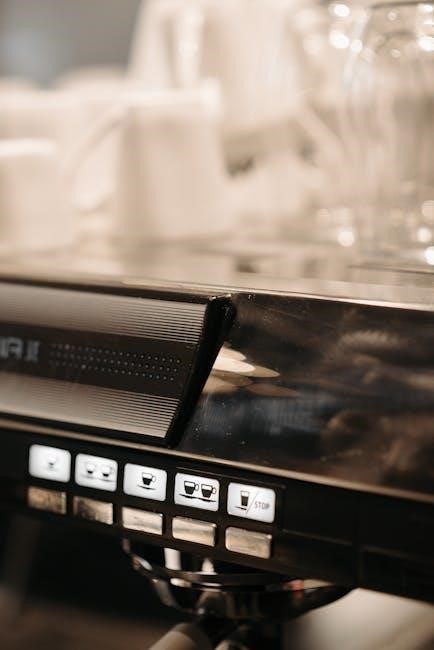
Explore the key parts – water reservoir, portafilter, steam wand, and control panel – understanding their roles in brewing perfect espresso and maintaining your Cuisinart machine.
Water Reservoir: Capacity and Filling Instructions
The water reservoir is crucial for your Cuisinart espresso machine’s operation. Its capacity varies depending on the model – typically ranging from 50 to 70 ounces. Always use fresh, filtered water to ensure optimal taste and prevent scale buildup within the machine’s internal components.
To fill the reservoir, carefully remove it from the machine. Locate the maximum fill line indicated on the reservoir itself; do not exceed this level. Fill with cold water, avoiding the minimum fill line to prevent pump issues.
Re-insert the reservoir securely into the machine, ensuring it clicks into place. Regularly check the water level before each use, as low water levels can affect brewing quality and potentially damage the machine. Consistent use of filtered water significantly reduces the frequency of descaling.
Portafilter: Types and Proper Usage
The portafilter is the handle with a basket used to hold ground coffee. Cuisinart machines typically include both single and double-shot baskets, allowing for varying espresso strengths. Ensure the basket is clean and dry before adding coffee grounds.
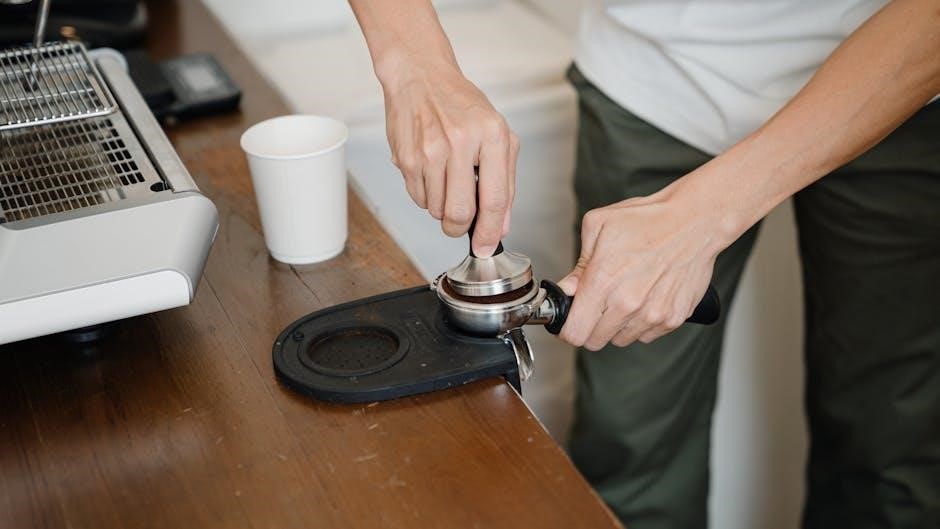
Proper usage involves filling the basket with the appropriate amount of ground coffee – around 7-8 grams for a single shot and 14-16 grams for a double. Gently level the grounds using a leveling tool or your finger, avoiding excessive tamping.
Securely lock the portafilter into the brew head, ensuring a tight seal. Incorrectly locked portafilters can result in weak or uneven extraction. After brewing, immediately discard used coffee grounds and thoroughly clean the portafilter and basket to prevent clogging and maintain optimal flavor.
Steam Wand: Operation and Safety
The steam wand is crucial for creating frothed milk for lattes and cappuccinos. Before use, purge the wand by briefly opening the steam valve to release any condensed water. Submerge the wand tip just below the milk surface and slowly introduce air to create microfoam – small, velvety bubbles.
Maintain a slight whirlpool motion while steaming to evenly distribute the foam. Once the milk reaches the desired temperature (around 150-160°F), turn off the steam valve.
Safety is paramount: always use a cool, damp cloth to wipe the wand immediately after use to prevent milk buildup. Never touch the wand during or immediately after steaming, as it becomes extremely hot. Be cautious of escaping steam and avoid directing it towards yourself or others.
Control Panel: Button Functions Explained
The Cuisinart espresso machine’s control panel features intuitive buttons for simplified operation. The ‘Power’ button initiates and terminates machine operation. ‘Espresso’ begins the espresso brewing cycle, typically with options for single or double shots, depending on the model.
The ‘Steam’ button activates the steam wand for milk frothing. Some models include a ‘Hot Water’ button for Americanos or preheating cups. Indicator lights signal when the machine is heating, ready to brew, or descaling is needed.
Understanding these functions is key to maximizing your machine’s potential. Refer to your specific model’s manual for detailed explanations of any unique button configurations or programmable settings. Proper use ensures consistent and delicious espresso beverages.

Operating Your Cuisinart Espresso Machine
Master brewing techniques, from espresso extraction to milk frothing, utilizing pre-ground coffee or whole beans for a personalized and flavorful coffee experience.
Brewing Espresso: Step-by-Step Guide
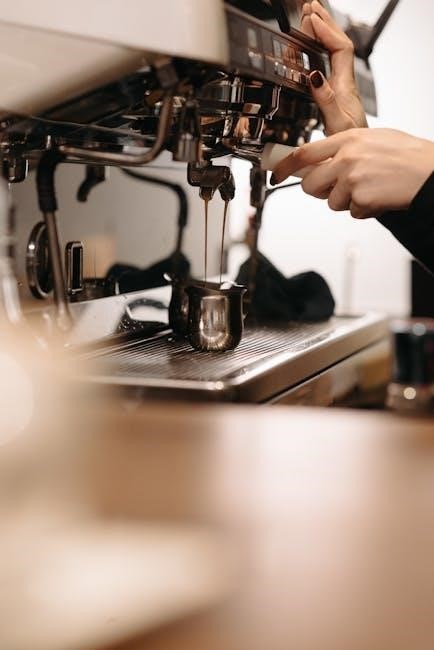
Begin by filling the portafilter with finely-ground coffee, ensuring it’s level but not tamped too firmly. Secure the portafilter into the brew head, and select your desired brew size – single or double shot. Initiate the brewing process by pressing the appropriate button on the control panel.
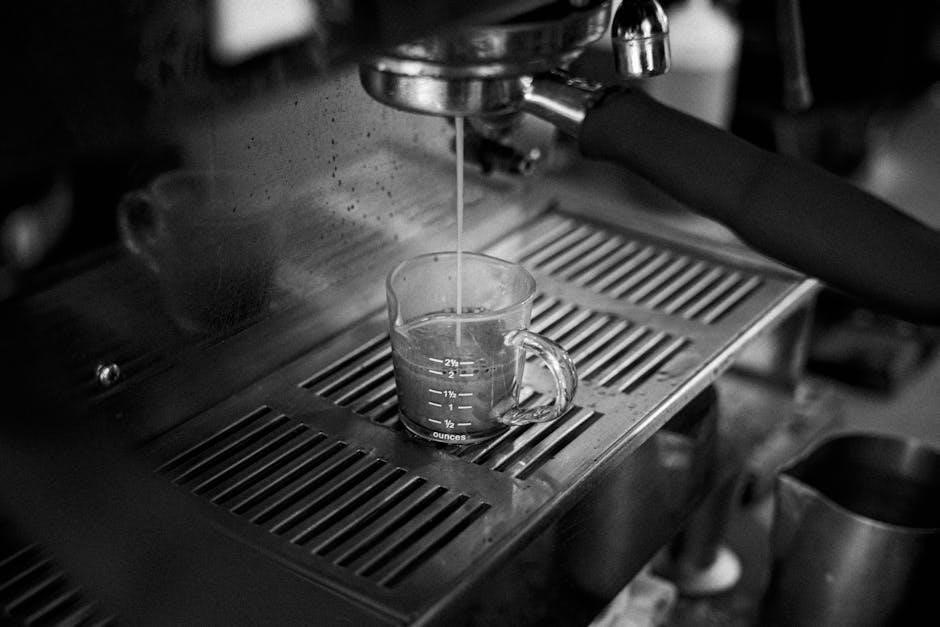
Observe as the rich, dark espresso begins to flow into your cup. Monitor the extraction; a proper brew should take around 20-30 seconds. If the espresso flows too quickly, the grind is likely too coarse. Conversely, a slow drip indicates a grind that’s too fine.
Experiment with grind size and tamping pressure to achieve your perfect espresso. Remember to preheat your cup for optimal temperature retention. Enjoy the robust flavor of your freshly brewed espresso, and adjust parameters for future brews!

Frothing Milk: Techniques for Different Textures
Start with cold milk – whole milk generally produces the best results. Purge the steam wand briefly to remove any condensation. Submerge the wand tip just below the milk’s surface and introduce air by slowly lowering the pitcher. This creates microfoam, essential for latte art and a velvety texture.
For a drier, foam-heavy texture, ideal for cappuccinos, keep the wand closer to the surface for a longer period. To heat the milk without adding more air, submerge the wand deeper and create a whirlpool effect. Monitor the milk temperature; aim for around 140-160°F (60-70°C).
Finally, tap the pitcher on the counter to release any large bubbles and swirl gently to integrate the foam. Practice these techniques to master different milk textures and elevate your espresso beverages!
Using Pre-Ground Coffee vs. Whole Beans

While Cuisinart espresso machines offer convenience, the quality of your brew significantly depends on your coffee choice. Whole beans, freshly ground just before brewing, deliver superior flavor and aroma due to preserved oils and compounds. Pre-ground coffee, however, is easier to use and requires no additional equipment.
If opting for pre-ground, select a fine grind specifically for espresso machines. Store pre-ground coffee in an airtight container in a cool, dark place to minimize staleness. For optimal results, invest in a burr grinder to achieve a consistent grind size with whole beans.
Experiment with both options to determine your preference, but remember that freshly ground beans consistently provide a richer, more nuanced espresso experience. Consider the trade-off between convenience and quality when making your decision.
Maintenance and Cleaning
Regular descaling, portafilter cleaning, and steam wand maintenance are crucial for longevity. Follow a routine schedule to ensure peak performance and delicious espresso.
Descaling Your Cuisinart Espresso Machine
Descaling is a vital maintenance procedure for your Cuisinart espresso machine, removing mineral buildup that can affect performance and taste. Over time, hard water deposits calcium and lime scale within the machine’s internal components, hindering water flow and heating efficiency. Regular descaling – typically every 3-6 months, depending on water hardness – ensures optimal operation.
To descale, use a commercially available descaling solution specifically designed for espresso machines, or a mixture of white vinegar and water (follow your machine’s manual for the correct ratio); Run the solution through a full brewing cycle without coffee, then repeat with fresh water several times to thoroughly rinse away any residual descaling agent. Always consult your specific model’s manual for detailed descaling instructions, as procedures can vary slightly between series.
Ignoring descaling can lead to reduced espresso quality, longer brewing times, and ultimately, potential damage to your machine. A properly descaled machine delivers consistently flavorful espresso and extends its lifespan.
Cleaning the Portafilter and Filter Baskets
Maintaining a clean portafilter and filter baskets is crucial for optimal espresso extraction. After each use, immediately knock out used coffee grounds. Rinse the portafilter and baskets under warm water, ensuring all residue is removed. For a deeper clean, disassemble the portafilter (if possible, depending on the model) and wash each component with warm, soapy water.
Pay close attention to the shower screen within the portafilter, as coffee oils can accumulate here. Use a soft brush or toothpick to gently dislodge any stubborn particles. Ensure the filter baskets are free of blockages, as these can impede water flow and affect espresso quality. Avoid abrasive cleaners, as they can damage the metal.
Regular cleaning prevents the buildup of coffee oils and residue, which can impart a bitter taste to your espresso. A spotless portafilter and basket contribute to a consistently delicious brew and prolong the life of your Cuisinart machine.
Cleaning the Steam Wand
Immediately after each use, purge the steam wand by briefly opening the steam valve to release any residual milk. This prevents milk from drying inside the wand, which can cause blockages and affect steam pressure. Wipe down the steam wand with a damp cloth to remove any visible milk residue.
For a thorough cleaning, submerge the steam wand tip in a cup of water and briefly activate the steam valve. This forces any remaining milk through the wand and into the water. Regularly disassemble the steam wand tip (if your model allows) and soak it in warm, soapy water to remove stubborn milk buildup;
Avoid using abrasive cleaners or scouring pads, as these can scratch the stainless steel. A clean steam wand is essential for creating perfectly frothed milk and maintaining the hygiene of your Cuisinart espresso machine.
Routine Cleaning Schedule
To ensure optimal performance and longevity of your Cuisinart espresso machine, establish a regular cleaning schedule. Daily, wipe down the exterior, clean the portafilter and filter baskets, and purge/wipe the steam wand after each use.
Weekly, perform a more detailed cleaning, including backflushing (if applicable to your model) and thoroughly cleaning the drip tray. Monthly, descale the machine to remove mineral buildup, following the descaling instructions in your manual. Pay attention to the water reservoir and clean it regularly.
Regular maintenance prevents malfunctions and ensures consistently delicious espresso. Ignoring cleaning can lead to reduced performance, altered coffee taste, and potential damage to the machine. Consistent care extends the life of your investment and guarantees enjoyable brewing for years to come.
Troubleshooting Common Issues
Resolve problems like the machine not powering on, improper brewing, or a malfunctioning steam wand with dedicated solutions found within your Cuisinart manual.
Machine Not Turning On
First, ensure the machine is properly plugged into a functioning power outlet. A simple check – try another appliance in the same outlet – can quickly identify a power source issue. Next, verify the main power switch, typically located on the back or side of the unit, is in the ‘On’ position.
If the machine still fails to power on, inspect the power cord for any visible damage, such as cuts or fraying. A damaged cord presents a safety hazard and should be replaced. Consider checking the circuit breaker or fuse box to confirm the circuit hasn’t tripped or the fuse hasn’t blown.
Finally, consult your Cuisinart espresso machine manual for specific troubleshooting steps related to your model. Some models may have a reset button or require a specific power-up sequence. Remember to always disconnect the machine from the power source before inspecting or replacing any components.

Espresso Not Brewing Properly
If your Cuisinart espresso machine isn’t brewing correctly, begin by checking the water reservoir – ensure it’s filled to the appropriate level. Next, verify the portafilter is securely locked into the brew group. An improperly seated portafilter prevents water from flowing through the coffee grounds.
Inspect the coffee grounds; they should be finely ground and tamped evenly. Uneven tamping or coarse grounds can lead to weak or inconsistent extraction. Also, confirm the filter basket isn’t clogged. Remove and rinse it thoroughly.
Consider descaling the machine if it hasn’t been done recently, as mineral buildup can restrict water flow. Finally, consult your model’s manual for specific troubleshooting guidance. Remember, consistent brewing relies on proper grind size, tamping pressure, and a clean machine.
Steam Wand Not Working
When the steam wand fails to function, first ensure the machine has fully heated up; steam generation requires reaching optimal temperature. Check that the steam release dial is fully open – a partially closed dial restricts steam flow. Purge the wand briefly before each use to remove any condensed water, which can hinder steam production.
Inspect the steam wand for blockages. Mineral deposits or milk residue can accumulate and obstruct the steam outlet. Use a damp cloth to wipe the wand clean, and consider using a steam wand cleaning tool for deeper cleaning.
Verify the water reservoir has sufficient water, as steam generation consumes a significant amount. If the issue persists, consult your Cuisinart espresso machine’s manual for model-specific troubleshooting steps. Regular cleaning and proper operation are key to maintaining steam wand functionality.