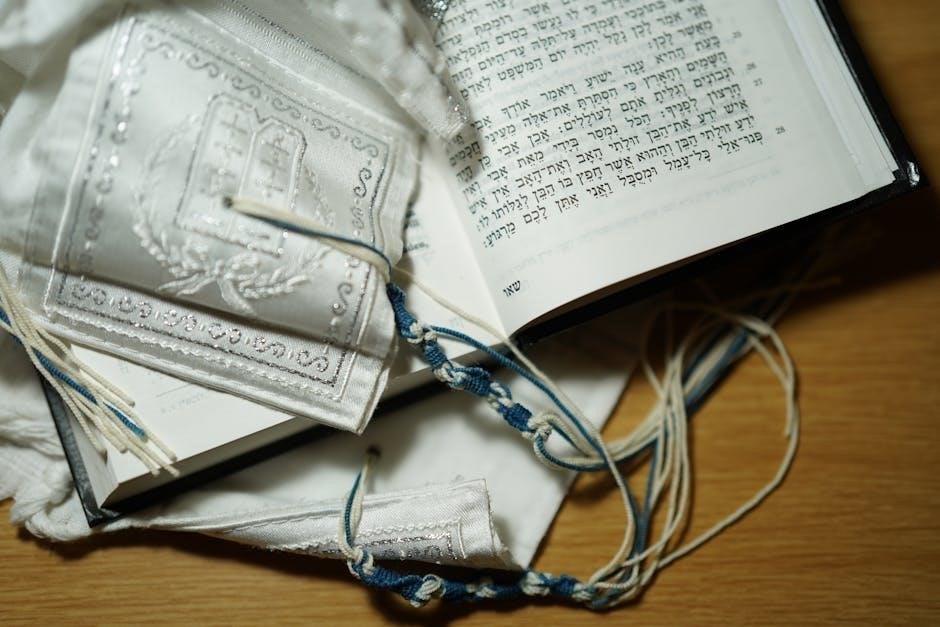
This 10-minute Haggadah, created by Rabbi Samantha Frank for Passover 5781/2021, streamlines the Seder. It’s designed for multi-generational, virtual gatherings, especially engaging children aged five and up.
What is a Haggadah?
A Haggadah is the book used by those celebrating Passover to tell the story of the Exodus, the liberation of the Israelites from slavery in ancient Egypt. Traditionally, it outlines the order of the Seder, the ritual feast commemorating this historical event.
However, a Haggadah isn’t a fixed text; variations abound, reflecting different traditions and interpretations. The 10-minute Haggadah represents a modern adaptation, condensing the traditional narrative into a brief, accessible format. It retains core elements while prioritizing brevity, making it ideal for families with young children or those seeking a shorter Seder experience. It’s a tool for storytelling and remembrance.
The Appeal of a Condensed Seder
A condensed Seder, like the 10-minute Haggadah offers, addresses the challenges of modern life. Maintaining focus for extended periods can be difficult, especially for children. A shorter Seder keeps participants engaged and prevents restlessness.
Furthermore, it acknowledges varying levels of observance and familiarity with the traditions. It provides an accessible entry point for those less acquainted with the full Seder ritual. This streamlined approach doesn’t diminish the significance of Passover; rather, it prioritizes the essential narrative and symbolic elements, making the story relatable and memorable for all.
Why a 10-Minute Version?
The 10-minute Haggadah was specifically crafted for multi-generational virtual Seders, recognizing the unique demands of online gatherings. It caters to shorter attention spans, particularly among younger participants, ensuring they remain engaged with the Passover story.
Rabbi Samantha Frank’s creation distills the Seder to its core elements, prioritizing essential storytelling and symbolic actions. This brevity allows for a meaningful experience without overwhelming participants. It’s a practical solution for families seeking a streamlined, accessible, and enjoyable Passover celebration, especially in today’s fast-paced world.

Finding and Accessing the 10-Minute Haggadah PDF
The 92Y Passover Haggadah, by Rabbi Samantha Frank, is a key resource. Search online for “10 minute Haggadah PDF” to locate downloadable versions easily.
Online Sources for Download
Locating a 10-minute Haggadah PDF is readily achievable through various online platforms. A simple web search using keywords like “10 minute Haggadah download” or “minimalist Haggadah PDF” will yield numerous results. Many Jewish organizations and communities offer free downloadable versions to facilitate accessible Seders.
Specifically, resources like the 92Y Passover Haggadah created by Rabbi Samantha Frank are often available online. Additionally, websites dedicated to Jewish holidays and traditions, such as My Jewish Learning and Chabad.org (mentioned later), may host or link to condensed Haggadah options. Remember to verify the source before downloading any files.
92Y Passover Haggadah (Rabbi Samantha Frank) ⎯ A Key Resource
Rabbi Samantha Frank’s 92Y Passover Haggadah, designed for Passover 5781/2021, stands out as a particularly valuable resource for those seeking a concise Seder experience. This Haggadah specifically focuses on streamlining the traditional order, making it ideal for families with young children or those preferring a shorter ceremony.
The structure includes sections like Kadesh (the first cup of wine), Urchatz (ritual handwashing), and Karpas (green vegetable), all presented briefly. It’s geared towards multi-generational and virtual Seders, prioritizing essential elements and fostering engagement.
Minimalist Haggadah Options
Beyond Rabbi Frank’s 92Y version, several “Minimalist Haggadah” options cater to those desiring a significantly abbreviated Seder. These resources often present a secular approach, distilling the Passover story to its core narrative. The motivation behind these condensed versions frequently stems from a desire to make the Seder more accessible and engaging for diverse audiences.
These Haggadahs prioritize brevity, focusing on the essential themes of freedom and remembrance. They are particularly useful for interfaith families or individuals seeking a less religiously intensive observance, while still honoring the spirit of Passover.

Core Elements Included in a 10-Minute Haggadah
The 10-minute Haggadah retains key rituals: Kadesh (wine), Urchatz (handwashing), Karpas (vegetable), and Yachatz (breaking matzah), forming the Seder’s foundational steps.
Kadesh: The First Cup of Wine
Kadesh, the initial blessing over wine, marks the ceremonial beginning of the Seder within the 10-minute Haggadah. This first cup symbolizes the Jewish people’s liberation from Egyptian bondage. The blessing recited acknowledges God’s holiness and commemorates the Exodus.
In this condensed version, the focus remains on the core meaning of sanctification. While elaborate interpretations might be omitted for brevity, the act of blessing and drinking the wine retains its central significance. It sets a reverent tone, inviting participants to reflect on the historical and spiritual importance of Passover. The wine represents joy and freedom.
Urchatz: First Ritual Handwashing
Urchatz, the first ritual handwashing in the 10-minute Haggadah, is performed before the Karpas, and is distinct from the handwashing later in the Seder. Traditionally, no blessing accompanies this washing; it’s a symbolic act of purification.
Within this abbreviated Seder, Urchatz maintains its role as a preparatory step, signifying a move from everyday concerns to the sacred observance of Passover. It’s a physical act representing spiritual cleansing, preparing participants for the symbolic consumption of the Karpas. The brevity of the 10-minute format doesn’t diminish its importance as a transitional ritual.
Karpas: Green Vegetable
Karpas, in the streamlined 10-minute Haggadah, involves dipping a green vegetable – often parsley – into salt water. This act symbolizes the tears shed by the Israelites during their enslavement in Egypt. The salt water represents those tears, adding a poignant layer of meaning to this early Seder ritual.
Within this condensed format, Karpas serves as a visual and sensory introduction to the themes of suffering and liberation central to the Passover story. It’s a brief but impactful moment, prompting reflection even within the accelerated pace of the 10-minute Seder experience.
Yachatz: Breaking the Middle Matzah
Yachatz, within the 10-minute Haggadah’s framework, involves breaking the middle matzah in two. One half is hidden – the afikoman – and later “rediscovered” by the children, creating a playful element. This act symbolizes the humility and brokenness experienced during the Israelites’ slavery.
The hidden matzah represents a hope for redemption and the anticipation of liberation. In this abbreviated Seder, Yachatz maintains its symbolic weight, even as the ritual is performed swiftly. It’s a key step preparing for the Maggid section, the storytelling portion of the Seder.

The Maggid Section: Storytelling in Brief
Maggid, in this 10-minute Haggadah, condenses the Exodus narrative. It includes simplified versions of the Four Questions and Four Children, focusing on essential storytelling.
The Four Questions – Simplified
Within Rabbi Frank’s 10-minute Haggadah, the traditional Four Questions are presented in a streamlined manner, suitable for a shorter Seder and younger participants. Instead of lengthy inquiries, the questions are focused on highlighting the unique aspects of the Passover night.
This adaptation aims to quickly establish the core themes of freedom and remembrance. The simplified questions prompt discussion about why this night differs from all others, focusing on the symbolic foods and rituals. This approach ensures that even young children can grasp the fundamental concepts of the Passover story without getting bogged down in complex details.
The Four Children – Condensed Representation
Rabbi Frank’s 10-minute Haggadah offers a concise portrayal of the Four Children, a cornerstone of the Seder narrative. Recognizing the time constraints, the Haggadah presents each child – the wise, wicked, simple, and the one who doesn’t know how to ask – with brief characterizations.
This condensed version focuses on the core message of adapting the Passover story to different levels of understanding and engagement. It emphasizes the importance of reaching everyone at the Seder, regardless of their background or knowledge. The simplified representation maintains the symbolic weight of the tradition while streamlining the storytelling process.
The Story of the Exodus – Essential Narrative
Within Rabbi Frank’s 10-minute Haggadah, the Exodus story is distilled to its essential elements, prioritizing brevity without sacrificing the core message of liberation. The Haggadah focuses on the Israelites’ enslavement in Egypt, their plea to God, the ten plagues, and ultimately, their freedom led by Moses.
This condensed narrative aims to convey the fundamental themes of hope, resilience, and the pursuit of justice. It’s presented in a way that’s accessible to all ages, ensuring that the central story of Passover remains impactful even within a shortened Seder experience. The focus remains on remembering and retelling this pivotal moment in Jewish history.

Seder Plate Components & Their Significance
The 10-minute Haggadah acknowledges the Seder plate’s symbolic foods: matzah, maror & charoset, beitzah, and zeroa, representing affliction, bitterness, hope, and remembrance.
Matzah: The Bread of Affliction
Within the 10-minute Haggadah, matzah powerfully symbolizes the unleavened bread our ancestors ate during their hurried exodus from Egypt. It represents the affliction and hardship endured during slavery, a poignant reminder of the Israelites’ lack of time for proper bread rising.
This simple, yet profound, element connects the present Seder observance to the historical narrative. The matzah serves as a tangible link to the past, prompting reflection on freedom and the importance of remembering those who suffered. Its presence on the Seder plate isn’t merely a tradition, but a crucial component of the storytelling experience.
Maror & Charoset: Bitter Herbs & Sweet Paste
The 10-minute Haggadah incorporates maror (bitter herbs) and charoset (sweet paste) to represent the contrasting experiences of slavery and freedom. Maror symbolizes the bitterness of the Israelites’ enslavement in Egypt, a harsh reminder of their suffering.
Conversely, charoset, often resembling mortar, alludes to the mortar the Israelites used while building for Pharaoh. Its sweetness represents the hope and eventual sweetness of freedom. These elements, consumed together, offer a complex and layered understanding of the Exodus story, even within a condensed Seder format.
Beitzah & Zeroa: Egg & Shank Bone – Symbolic Representations
Within the streamlined 10-minute Haggadah, the beitzah (egg) and zeroa (shank bone) maintain symbolic significance, though their explanations may be brief. The beitzah represents the festival sacrifice offered in the Temple in Jerusalem, a symbol of mourning for its loss.
The zeroa, a roasted shank bone, symbolizes the Passover sacrifice, recalling God’s passing over Jewish homes during the final plague. These items, present on the Seder plate, serve as visual reminders of the historical and religious context of Passover, even within the abbreviated Seder’s timeframe.
The Remaining Steps of the Seder (Abbreviated)
The 10-minute Haggadah quickly moves through Korech (sandwich eating), Shulchan Orech (the meal), and Tzafun (hidden matzah), maintaining core traditions efficiently.
Korech: Eating a Sandwich
Within the 10-minute Haggadah, Korech represents a symbolic act of combining flavors and experiences. Participants eat a sandwich comprised of haroset (sweet paste) and maror (bitter herbs) placed between two pieces of matzah.
This practice recalls the days of slavery and freedom, blending the bitterness of oppression with the sweetness of redemption. The sandwich isn’t merely a culinary experience; it’s a tangible reminder of the Exodus story. It’s a brief, yet potent, moment within the condensed Seder, designed to be both meaningful and accessible for all ages, especially during a shorter observance.
Shulchan Orech: The Festive Meal
The 10-minute Haggadah acknowledges Shulchan Orech, the festive meal, as a central component of the Passover Seder, though it’s understandably abbreviated. This section emphasizes gratitude for the freedom achieved and the bounty provided.
While a full, elaborate meal isn’t feasible within the time constraint, the Haggadah encourages mindful enjoyment of whatever food is present. It’s a moment to connect with family and friends, sharing conversation and reflecting on the themes of liberation and renewal. The meal, even in its simplified form, remains a vital expression of the Seder’s spirit.
Tzafun: Hidden Matzah
The 10-minute Haggadah incorporates Tzafun, the hidden matzah, as a playful element designed to engage participants, particularly children. This tradition, stemming from the afikoman ritual, involves hiding a piece of matzah earlier in the Seder and “rediscovering” it now.
The Haggadah likely simplifies the associated “ransom” custom, focusing instead on the joy of finding the hidden matzah. It serves as a sweet conclusion to the meal and a transition towards the final blessings and songs. This element maintains a sense of anticipation and fun within the condensed Seder format.

Utilizing the Haggadah for Multi-Generational Seders
This 10-minute Haggadah excels at inclusivity, specifically designed for virtual Seders and families with diverse observance levels, engaging children effectively.
Engaging Children with a Shorter Seder
A 10-minute Haggadah is exceptionally well-suited for younger participants. Traditional Seders can be lengthy, potentially losing a child’s attention. This condensed version, geared towards kids aged five and up, distills the Seder to its core elements, maintaining engagement.
By focusing on essential storytelling – the Four Questions, the Four Children, and the Exodus narrative – it presents Passover’s themes in an accessible format. The brevity encourages participation and fosters a positive association with the holiday. It’s a fantastic way to introduce children to the Seder experience without overwhelming them.
Adapting for Virtual Seders
The 10-minute Haggadah proves particularly effective for virtual Seders. Online gatherings often benefit from concise formats to maintain participant focus. This streamlined version minimizes potential technical difficulties and keeps the Seder moving at a comfortable pace for remote attendees.
Its design caters to multi-generational virtual settings, ensuring everyone can actively participate, regardless of location. The brevity allows for more interactive elements, like discussions or shared reflections. It’s a practical solution for connecting families and celebrating Passover meaningfully, even when physically apart.
Accessibility for Different Levels of Observance
The 10-minute Haggadah offers broad accessibility, accommodating diverse levels of Passover observance. Its condensed nature doesn’t necessitate strict adherence to every traditional detail, making it welcoming for those newer to the Seder experience.
This approach allows families with varying practices to participate comfortably together. The focus remains on the core narrative of the Exodus, fostering a shared understanding of the holiday’s significance. It’s a flexible option, respecting individual customs while still providing a meaningful and engaging Seder for all involved, regardless of background.

Tracking Package Delivery (Related to PDF Access)
FedEx is a common delivery method for physical copies. You can track shipments using a tracking number on Fedex.com, or even without one!
FedEx Tracking – A Common Delivery Method
FedEx provides comprehensive tracking tools for your 10-Minute Haggadah PDF delivery, should you opt for a physical copy. Access the Fedex.com site to log in to your account and instantly retrieve your tracking status. You can also track by reference, or utilize your Tracking Control Number (TCN).
FedEx supports tracking for Express, Ground, Home Delivery, SmartPost, Freight, and Custom Critical shipments. Understanding the status updates, like an “Exception,” is crucial for anticipating potential delays. FedEx offers options to obtain proof of delivery, confirming successful receipt of your Haggadah.
Tracking Without a Tracking Number
Even without a traditional tracking number, locating your 10-Minute Haggadah PDF delivery (if a physical copy was ordered) is possible. FedEx allows tracking “by reference,” utilizing information like a purchase order or invoice number. This method requires details provided by the sender at the time of shipment.
Alternatively, contact the sender directly to request the tracking number. Many online retailers also provide order history sections within your account, where tracking information is readily available. Utilizing these resources can help pinpoint your package’s location and estimated delivery date.
Understanding FedEx Status Updates (e.g., “Exception”)
When tracking your 10-Minute Haggadah PDF delivery (if a physical copy was ordered via FedEx), understanding status updates is crucial. An “Exception” status doesn’t necessarily mean a problem; it indicates an unforeseen circumstance. This could range from weather delays to incorrect address information or customs clearance.
Further investigation is often needed. Check the detailed tracking information for specifics. Contacting FedEx customer support with your tracking number provides clarity. Resolving the exception quickly ensures timely delivery of your Haggadah for a meaningful Passover Seder.

Advanced Tracking Dashboards & Shipment Management
FedEx dashboards manage up to 20,000 shipments, offering reports and estimated delivery windows. This is useful if ordering multiple 10-Minute Haggadah PDFs!
Managing Multiple Shipments
If you’re coordinating 10-Minute Haggadah PDFs for an entire family or community, FedEx’s advanced tracking dashboard is incredibly helpful. It allows you to oversee thousands of packages simultaneously – up to 20,000 shipments, in fact! This centralized view simplifies the process of ensuring everyone receives their copy in time for Passover.
The dashboard isn’t just about quantity; it’s about organization. You can easily monitor the status of each individual shipment, identify potential delays, and proactively address any issues that may arise. This is particularly valuable when dealing with numerous deliveries across different locations;
Viewing Estimated Delivery Windows
When distributing the 10-Minute Haggadah PDF, keeping recipients informed is key. FedEx’s advanced tracking dashboard provides estimated delivery windows, offering a clearer picture than just a delivery date. This feature allows you to proactively communicate with family and friends, letting them know when to expect their digital Haggadah.
Providing these windows manages expectations and reduces anxiety about potential delays. Accurate information ensures everyone can prepare for the Seder with peace of mind, knowing their Haggadah will arrive promptly. This transparency builds confidence and enhances the overall experience.
Obtaining Proof of Delivery
For peace of mind when sharing the 10-Minute Haggadah PDF, obtaining proof of delivery is valuable. FedEx offers this service, confirming the recipient successfully received the digital file. This is particularly useful for ensuring family members, especially those less tech-savvy, have access to the Haggadah before the Seder.
Proof of delivery provides documentation in case of any disputes or concerns about access. It’s a simple way to verify successful transmission and avoid last-minute scrambling. Accessing this proof through the FedEx website adds an extra layer of reassurance for a smooth and joyful Passover celebration.

Resources for Further Passover Information
Explore My Jewish Learning, Chabad.org, and ReformJudaism.org for deeper insights into Passover traditions, the Seder, and enriching your 10-Minute Haggadah experience.
My Jewish Learning
My Jewish Learning serves as a comprehensive online resource, offering detailed explanations of Passover’s history, customs, and theological significance. It provides articles exploring the symbolism embedded within the Seder plate components – matzah, maror, and charoset – enhancing understanding of the 10-Minute Haggadah’s core elements.
You’ll find interpretations of the Four Questions and the Four Children, enriching the storytelling aspect of the abbreviated Seder. The site also delves into the meaning of each step, like Kadesh and Yachatz, offering context for a more meaningful experience. It’s a valuable tool for both beginners and those seeking a deeper connection to the holiday’s traditions.
Chabad.org
Chabad.org presents a wealth of information regarding Passover observance, including detailed guides to the Seder and its rituals. While not specifically focused on a 10-minute format, it provides foundational knowledge for understanding the Haggadah’s components – Kadesh, Karpas, and Maggid – which are all included in the condensed version.
The site offers insights into the significance of the Seder plate items, like the beitzah and zeroa, and explains the historical context of the Exodus story. It’s a resource for exploring the deeper meaning behind each step, allowing for a more informed and spiritually enriching experience, even within a shorter Seder framework.
ReformJudaism.org
ReformJudaism.org offers diverse perspectives on Passover and the Seder, emphasizing its themes of freedom, justice, and remembrance. While a dedicated 10-minute Haggadah isn’t directly available, the site provides resources for adapting the Seder to fit contemporary needs and varying levels of observance.
You’ll find articles exploring innovative ways to engage families, particularly children, with the Passover story. It supports creating meaningful Seders that resonate with modern values, potentially complementing a condensed version by offering supplementary discussion points or interpretations of the traditional elements like Matzah and Maror.